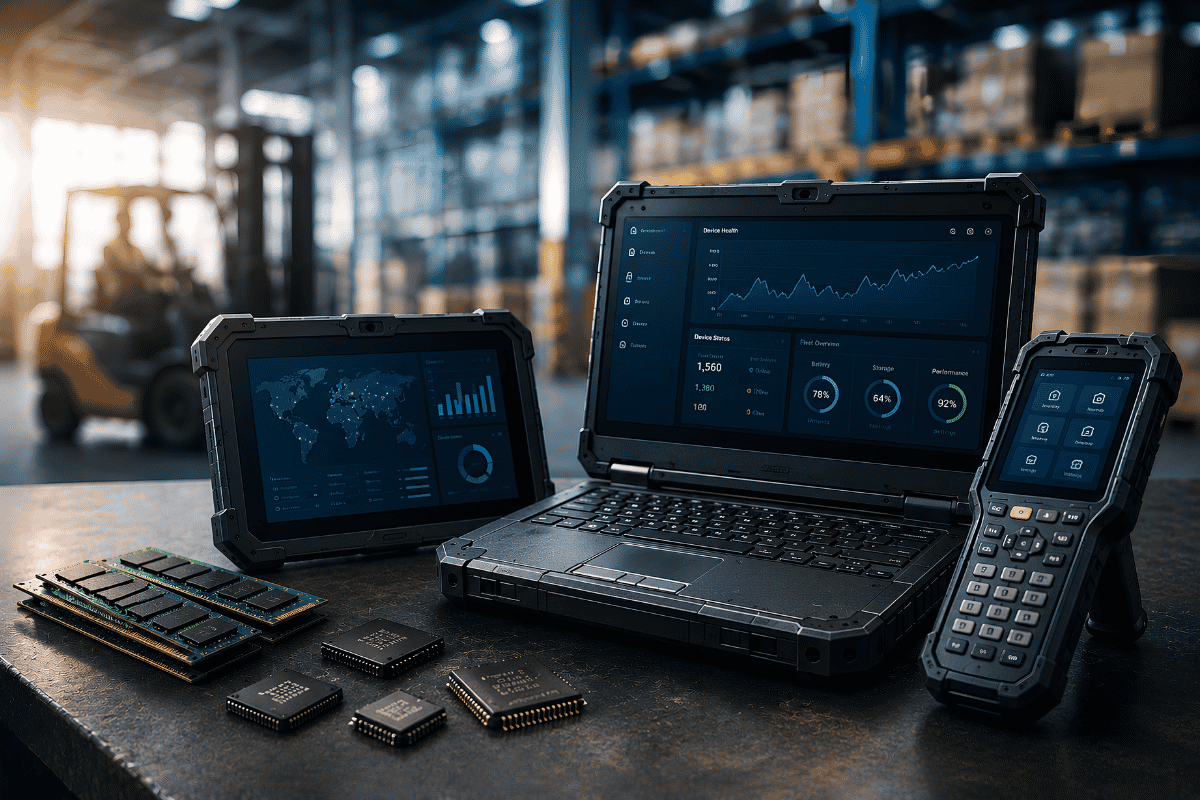
The global technology sector is facing increasing pressure from memory shortages in 2026. As artificial intelligence, cloud computing, edge computing, and enterprise mobility continue to expand, demand for DRAM and NAND memory has reached unprecedented levels.
While memory shortages affect everything from smartphones to data centers, rugged device availability has become a growing concern for businesses that depend on frontline technology.
Organizations operating in logistics, warehousing, manufacturing, healthcare, utilities, transportation, and field service environments rely heavily on rugged tablets, handheld scanners, industrial laptops, and mobile computers to support critical workflows.
When memory components become difficult to source, device manufacturers face production delays, longer lead times, and rising costs. These challenges ultimately impact businesses that need reliable hardware to maintain productivity and operational continuity.
Understanding how memory shortages affect rugged device availability can help organizations make smarter procurement decisions and prepare for future supply challenges.
Why Memory Matters in Rugged Devices
Memory is one of the most important components inside modern rugged hardware.
Every rugged device depends on memory technologies to support:
- Operating systems
- Enterprise applications
- Real-time processing
- Offline workflows
- Data collection
- Mobile communications
Two memory types are particularly important.
DRAM
DRAM handles active computing tasks.
It supports:
- Application performance
- Multitasking
- Data processing
- Real-time system operations
NAND Storage
NAND provides long-term storage.
It is used for:
- Operating systems
- Device storage
- Business applications
- User data
- Offline information
Without sufficient DRAM and NAND availability, manufacturers cannot build rugged devices at the scale required by enterprise customers.
What Is Causing Memory Shortages?
Several factors are contributing to the global memory shortage.
AI Infrastructure Growth
Artificial intelligence has become one of the largest consumers of memory technology.
AI systems require enormous amounts of DRAM and NAND to train models, process data, and deliver results.
As AI adoption accelerates, competition for memory resources continues to increase.
Cloud Data Center Expansion
Cloud providers are investing heavily in infrastructure to support AI and enterprise workloads.
These facilities consume vast quantities of memory.
Semiconductor Manufacturing Constraints
Memory production requires highly specialized manufacturing facilities.
Expanding capacity takes years and requires significant investment.
As demand rises faster than production capability, shortages become more likely.
Global Supply Chain Challenges
Transportation delays, geopolitical uncertainty, and logistics bottlenecks continue to affect semiconductor distribution worldwide.
These issues further restrict memory availability.
How DRAM Shortages Affect Rugged Device Performance
DRAM plays a critical role in rugged device functionality.
Modern rugged devices frequently support:
- Inventory management systems
- Mobile workforce applications
- Route optimization software
- Asset tracking solutions
- Field service platforms
When DRAM availability becomes limited, manufacturers may experience:
- Reduced production volumes
- Delayed launches
- Longer lead times
- Limited hardware configurations
Organizations deploying large fleets often face the greatest procurement challenges.
How NAND Shortages Affect Storage and Configurations
NAND shortages create additional complications.
Because NAND provides long-term storage, shortages may affect:
- Storage capacities
- Device configurations
- Software deployment options
- Data management capabilities
Manufacturers may prioritize certain product variants while delaying others.
Businesses may encounter:
- Reduced model availability
- Longer procurement timelines
- Higher hardware costs
- Limited storage options
These constraints can affect procurement flexibility and deployment planning.
How Memory Shortages Increase Lead Times
One of the most visible consequences of memory shortages is longer lead times.
Businesses that previously received rugged hardware within days may now wait weeks or even months.
Several factors contribute to these delays:
- Component shortages
- Manufacturing bottlenecks
- Increased enterprise demand
- Inventory limitations
- Logistics challenges
Long lead times make it more difficult for organizations to replace aging devices and support business growth.
Rising Rugged Device Costs
Memory shortages often increase production costs.
Manufacturers must compete for limited component availability, which can drive up pricing.
Businesses may experience higher costs for:
- Rugged tablets
- Mobile computers
- Handheld scanners
- Industrial laptops
- Vehicle-mounted systems
For organizations managing large device fleets, even small price increases can significantly affect procurement budgets.
This makes proactive planning increasingly important.
Operational Risks for Frontline Teams
Frontline workers rely on rugged devices to perform daily tasks.
Warehouse teams use scanners for inventory tracking. Field technicians depend on rugged tablets for service records and diagnostics. Healthcare workers rely on mobile devices for patient information.
When replacement hardware becomes unavailable, businesses may face:
- Workflow disruption
- Reduced productivity
- Increased downtime
- Delayed service delivery
- Operational inefficiencies
Even short-term device shortages can create long-term operational challenges.
Why Mixed Device Fleets Are Becoming More Common
When preferred hardware models become unavailable, organizations often purchase alternative devices.
Although this may solve immediate procurement issues, it frequently creates new problems.
Mixed fleets can introduce:
- Compatibility challenges
- Additional support requirements
- Security management complexity
- Training burdens
- Software inconsistencies
Maintaining hardware standardization becomes significantly more difficult during periods of limited device availability.
How Businesses Can Prepare for Supply Challenges
Businesses cannot directly control memory production, but they can reduce exposure to supply disruptions.
Forecast Hardware Requirements Early
Organizations should identify future device needs before shortages become critical.
Early planning improves procurement flexibility.
Standardize Hardware Platforms
Standardized device fleets simplify deployment, support, and security management.
Maintain Strong Supplier Relationships
Reliable vendors often provide better visibility into inventory availability and lead times.
Keep Spare Devices Available
Backup inventory helps reduce downtime when replacements are delayed.
Implement Lifecycle Planning
Proactive lifecycle management reduces emergency procurement decisions.
Use Mobile Device Management
MDM solutions provide visibility into device health, usage, and replacement requirements.
MDM solutions provide visibility into device health, usage, and replacement requirements. Streamlining Linux Device Management with MDM is also becoming important for businesses that use Linux-based rugged devices and need stronger control over updates, security, and fleet performance.
These strategies improve operational resilience and reduce procurement risk.
Why Rugged Devices Remain a Strong Investment
Despite current supply challenges, rugged devices continue to offer substantial value.
Compared to consumer-grade hardware, rugged devices typically provide:
- Longer lifecycles
- Greater durability
- Lower failure rates
- Reduced replacement frequency
- Better total cost of ownership
These advantages become even more valuable during periods of supply instability.
Organizations that invest in durable hardware often experience fewer disruptions and lower long-term costs.
Organizations that invest in durable hardware often experience fewer disruptions and lower long-term costs. The future of rugged devices will focus on longer lifecycles, stronger security, and smarter device management.
How Conker Helps Businesses Navigate Device Availability Challenges
Conker supports organizations through rugged hardware solutions and enterprise mobility services designed for demanding environments.
Their services include:
- Rugged device procurement
- Deployment support
- Lifecycle management
- Hardware standardization
- Enterprise mobility consulting
These solutions help businesses improve resilience while reducing exposure to supply-related challenges.
Future Outlook
Memory demand is expected to remain high throughout the coming years.
Several trends will continue shaping rugged device availability:
- Growing AI adoption
- Increased cloud infrastructure investment
- Rising enterprise mobility demand
- Continued semiconductor constraints
- Greater emphasis on lifecycle management
Organizations that plan will be better positioned to navigate future market volatility.
Conclusion
Memory shortages are becoming a major factor influencing rugged device availability in 2026.
Driven by AI growth, cloud expansion, semiconductor constraints, and ongoing supply chain challenges, memory shortages are affecting lead times, pricing, and procurement planning across the technology industry.
Businesses that proactively forecast demand, standardize hardware, build supplier relationships, and invest in durable, rugged technology will be better equipped to manage these challenges.
The organizations that prepare today will be more resilient tomorrow.
Frequently Asked Questions (FAQs)
1. What is causing memory shortages in 2026?
Memory shortages are primarily being driven by AI demand, cloud data center expansion, semiconductor manufacturing constraints, and global supply chain disruptions.
2. How do memory shortages affect rugged device availability?
Memory shortages can reduce production capacity, increase lead times, limit device configurations, and raise hardware costs.
3. Why are rugged device lead times increasing?
Limited memory availability, manufacturing bottlenecks, and growing enterprise demand are contributing to longer procurement timelines.
4. Which industries are most affected by rugged device shortages?
Logistics, warehousing, manufacturing, healthcare, transportation, utilities, and field service organizations are among the most affected.
5. How can businesses reduce the impact of memory shortages?
Businesses can forecast hardware requirements, standardize fleets, maintain supplier relationships, keep spare inventory, and implement lifecycle planning.
6. How does Conker help businesses manage rugged device availability?
Conker helps organizations through rugged device procurement, lifecycle management, mobility support, and enterprise mobility services.
7. What rugged solutions does Conker provide?
Conker provides rugged tablets, handheld scanners, industrial laptops, vehicle-mounted computers, and mobility solutions.
8. Why are rugged devices a strong long-term investment?
Rugged devices offer longer lifecycles, greater durability, lower failure rates, and reduced replacement frequency, helping businesses lower total ownership costs.