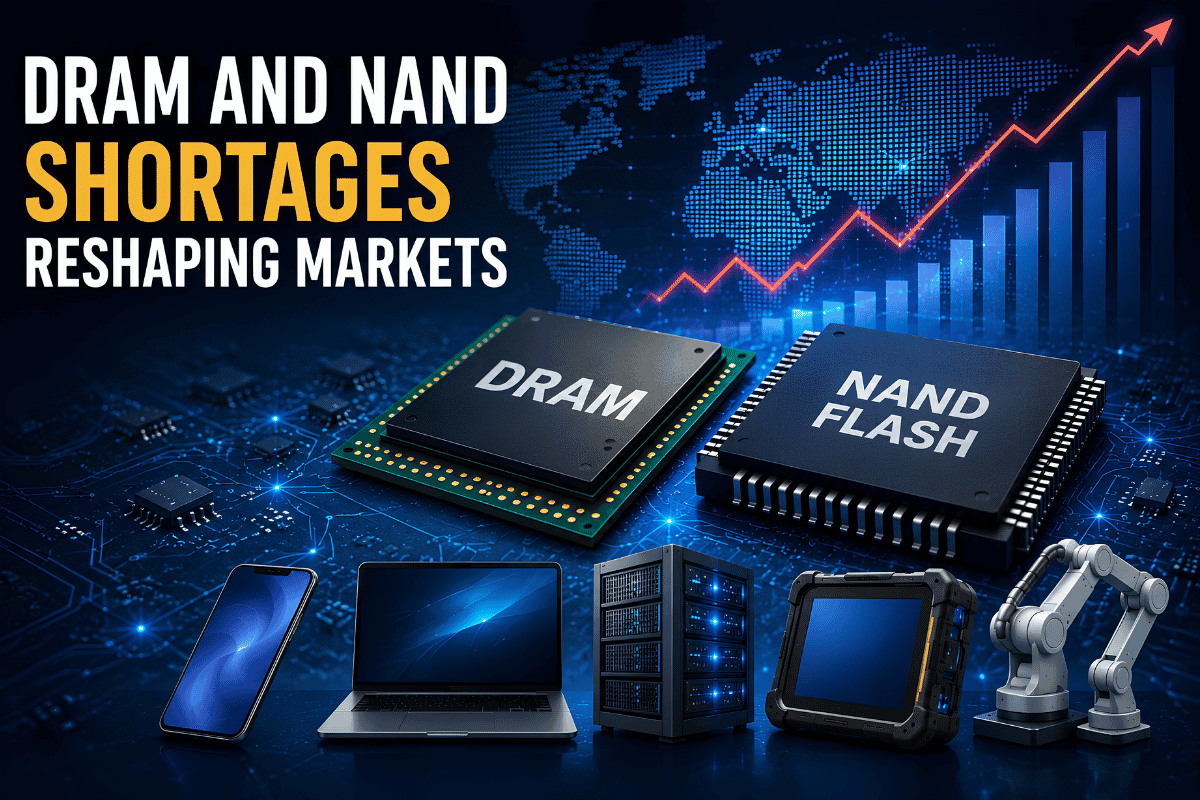
The global technology industry depends heavily on semiconductor memory. From smartphones and laptops to AI infrastructure and rugged enterprise devices, DRAM and NAND memory technologies power modern digital operations. Businesses are also closely monitoring emerging Rugged Device Trends to Watch, as enterprise mobility increasingly depends on high-performance memory, AI integration, and long-term hardware reliability.
In 2026, growing shortages of DRAM and NAND chips are reshaping global markets. Businesses are facing higher hardware costs, delayed shipments, inventory shortages, and increasing pressure to rethink procurement strategies.
While many consumers only notice rising electronics prices, the broader impact extends much further. Memory shortages are affecting supply chains, cloud computing, artificial intelligence infrastructure, automotive systems, and enterprise mobility environments worldwide.
As demand for advanced computing continues to grow, DRAM and NAND availability is becoming a major strategic concern for businesses across multiple industries.
What Are DRAM and NAND Technologies?
DRAM (Dynamic Random Access Memory) and NAND flash memory are two of the most important components in modern electronic devices.
DRAM
DRAM is a temporary high-speed memory used for active computing tasks. It allows systems to process data quickly while applications are running.
DRAM is commonly used in:
- Servers
- Laptops
- Smartphones
- AI systems
- Industrial computers
- Rugged enterprise devices
NAND Flash Memory
NAND is long-term storage memory used to save data permanently.
NAND powers:
- SSDs (Solid-State Drives)
- Smartphones
- Tablets
- Industrial storage systems
- Data centers
- Embedded enterprise devices
Without DRAM and NAND, modern digital infrastructure cannot function efficiently.
Why Memory Technologies Matter in 2026
The world is becoming increasingly dependent on data-intensive technologies.
Cloud computing, AI processing, IoT ecosystems, autonomous systems, and edge computing all require massive amounts of memory infrastructure.
This growing demand is pushing semiconductor manufacturers to their production limits.
Industries most affected include:
- Artificial intelligence
- Enterprise mobility
- Logistics
- Automotive manufacturing
- Healthcare technology
- Industrial automation
- Consumer electronics
As organizations digitize operations, memory supply stability becomes more important than ever.
What Is Causing DRAM and NAND Shortages?
Several major factors are contributing to ongoing memory shortages in global markets.
Rising AI Demand
Artificial intelligence is dramatically increasing memory consumption.
AI workloads require:
- High-performance servers
- Advanced GPUs
- Large-scale cloud infrastructure
- Massive data processing capabilities
These systems consume enormous amounts of DRAM and NAND memory.
As AI adoption accelerates, semiconductor manufacturers are struggling to keep pace with demand.
Supply Chain Disruptions
Global supply chains remain vulnerable following years of economic and geopolitical instability.
Challenges include:
- Manufacturing delays
- Transportation disruptions
- Component shortages
- Trade restrictions
- Rising material costs
Even small disruptions in semiconductor manufacturing can impact global technology markets significantly.
Increasing Semiconductor Dependency
Modern industries now depend on semiconductors more than ever before.
Vehicles, industrial machinery, healthcare devices, and logistics systems all require advanced memory technology.
This broad dependence increases pressure on already limited semiconductor production capacity.
Geopolitical Tensions
Global semiconductor production is concentrated in a relatively small number of regions.
Political tensions, export restrictions, and international trade disputes continue to affect semiconductor supply stability.
This creates uncertainty for businesses relying on consistent hardware availability.
How DRAM and NAND Shortages Are Affecting Global Markets
Memory shortages are creating widespread consequences across technology industries.
Rising Hardware Prices
One of the most visible impacts is increasing hardware costs.
Businesses are seeing higher prices for:
- Servers
- Laptops
- Rugged devices
- Industrial computers
- Smartphones
- Data center infrastructure
As memory prices rise, manufacturers pass these costs to customers.
This affects both enterprise procurement budgets and consumer purchasing decisions.
Delayed Hardware Production
Many technology manufacturers are experiencing production delays because memory components are unavailable.
This slows the delivery of:
- Enterprise hardware
- Industrial systems
- Consumer electronics
- Networking equipment
- AI infrastructure
Businesses relying on large-scale hardware deployments often face longer procurement timelines.
Enterprise Mobility Challenges
Rugged devices and enterprise mobility systems also depend heavily on semiconductor memory.
Industries using rugged technology may experience:
- Longer lead times
- Device shortages
- Higher replacement costs
- Limited hardware availability
This is especially problematic for logistics, warehousing, manufacturing, and field service organizations.
Impact on Rugged Enterprise Devices
Rugged hardware manufacturers are under increasing pressure due to component shortages.
Enterprise mobility devices require reliable:
- Processing power
- Storage systems
- Battery optimization
- Connectivity performance
DRAM and NAND shortages affect production consistency across rugged hardware ecosystems.
Businesses operating large mobile fleets may struggle to maintain standardized hardware environments.
Why Supply Chain Resilience Matters More in 2026
Many organizations are now rethinking procurement strategies to reduce technology supply risks.
Short-term purchasing decisions often create long-term operational problems.
Businesses are increasingly prioritizing:
- Strategic sourcing
- Vendor partnerships
- Lifecycle planning
- Hardware standardization
- Long-term inventory management
Supply chain resilience is becoming a competitive advantage.
The Growing Importance of Hardware Lifecycle Planning
Organizations are extending hardware lifecycles to reduce procurement pressure.
This makes lifecycle management more important than ever.
Businesses now focus on:
- Device durability
- Long-term support
- Repairability
- Upgrade planning
- Fleet consistency
Rugged devices are becoming more attractive because they offer longer operational lifespans compared to consumer-grade hardware. Businesses evaluating long-term mobility strategies are also researching How to choose the Best Rugged Devices based on durability, performance, lifecycle support, and operational requirements.
How Businesses Can Reduce Supply Chain Risks
Organizations cannot fully eliminate semiconductor shortages, but they can reduce operational risk through proactive planning.
Build Long-Term Supplier Relationships
Strong supplier partnerships improve procurement reliability during periods of market instability.
Standardize Hardware Fleets
Standardized device environments simplify support and reduce compatibility challenges.
Implement Lifecycle Planning
Businesses should create clear replacement schedules rather than relying on reactive purchasing.
Improve Inventory Forecasting
Better forecasting helps organizations prepare for potential shortages before they affect operations.
Invest in Durable Technology
Long-lasting rugged hardware reduces replacement frequency and improves operational continuity.
Why Hardware Standardization Matters
When hardware shortages occur, mixed device fleets often become more difficult to manage.
Standardization helps businesses:
- Simplify deployments
- Improve software compatibility
- Reduce IT complexity
- Streamline security management
- Improve long-term scalability
Organizations with standardized hardware environments are often more resilient during supply disruptions.
AI Infrastructure Is Accelerating Memory Demand
AI is one of the biggest drivers of memory consumption globally.
Large AI systems require:
- Advanced GPUs
- High-bandwidth DRAM
- Massive cloud storage
- Data-intensive processing systems
As AI adoption expands across industries, DRAM and NAND demand will likely continue increasing.
This means memory market volatility may remain a long-term challenge rather than a temporary issue.
Future Trends in the Semiconductor Market
Several trends are expected to shape the semiconductor industry over the next few years.
Increased Manufacturing Expansion
Chip manufacturers are investing heavily in new fabrication facilities.
More Regional Production
Countries are attempting to localize semiconductor production to reduce supply dependency.
AI-Driven Demand Growth
AI infrastructure will continue increasing memory requirements globally.
Greater Enterprise Planning
Businesses will likely focus more on lifecycle management and procurement forecasting.
Why Businesses Choose Conker
Many organizations work with Conker because they provide more than rugged hardware.
Their enterprise mobility solutions help businesses:
- Reduce downtime
- Improve device reliability
- Support long-term hardware planning
- Simplify mobility management
- Maintain operational continuity
This becomes increasingly valuable during periods of hardware supply instability.
Conclusion
DRAM and NAND shortages are reshaping global technology markets in significant ways.
From rising hardware costs to enterprise mobility challenges, memory shortages are influencing how businesses approach procurement, infrastructure planning, and operational resilience.
As AI adoption and digital transformation continue accelerating, demand for semiconductor memory will likely remain high.
Businesses that invest in proactive planning, rugged hardware strategies, and long-term supplier relationships will be better prepared to navigate ongoing market volatility in 2026 and beyond.
Frequently Asked Questions (FAQs)
1. What is DRAM memory?
DRAM (Dynamic Random Access Memory) is temporary, high-speed memory used by computers and devices to process active tasks and applications.
2. What is NAND flash memory?
NAND flash memory is a permanent storage memory commonly used in SSDs, smartphones, tablets, and enterprise storage systems.
3. Why are DRAM and NAND shortages happening?
Shortages are being driven by rising AI demand, supply chain disruptions, semiconductor manufacturing limits, and growing global dependence on digital infrastructure.
4. How do memory shortages affect businesses?
Businesses may experience higher hardware costs, delayed shipments, longer procurement timelines, and increased operational challenges.
5. Which industries are most affected by DRAM and NAND shortages?
Industries including AI, cloud computing, logistics, automotive manufacturing, healthcare, enterprise mobility, and industrial automation are heavily affected.
6. How does Conker help businesses during hardware supply challenges?
Conker helps businesses manage rugged mobility deployments through hardware standardization, lifecycle planning, and managed mobility support.
7. What rugged solutions does Conker provide?
Conker provides rugged tablets, handheld devices, industrial laptops, wearable technology, and enterprise mobility solutions.
8. How can businesses reduce semiconductor supply chain risks?
Businesses can reduce risk through long-term supplier partnerships, lifecycle planning, hardware standardization, inventory forecasting, and durable technology investments