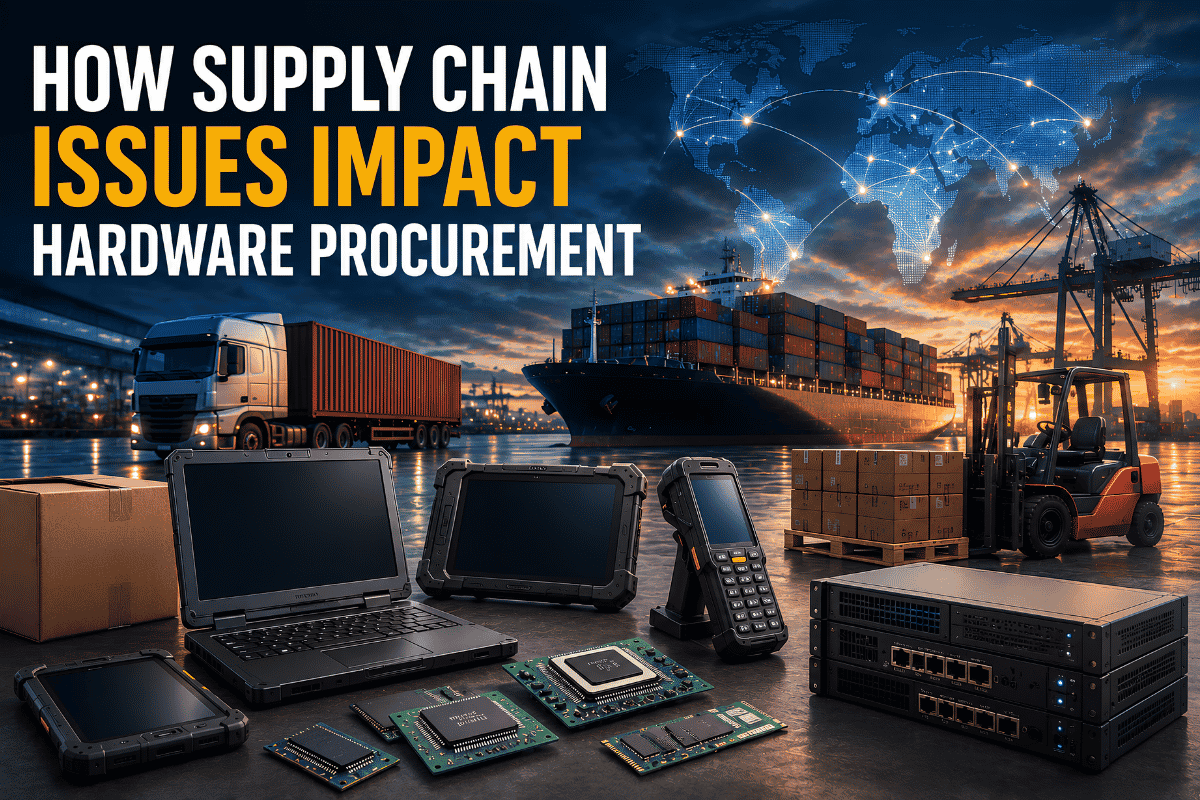
Modern businesses depend heavily on hardware to maintain productivity, communication, and operational continuity. From rugged tablets and industrial scanners to enterprise laptops and warehouse systems, hardware procurement has become a critical part of digital business infrastructure.
However, supply chain disruptions continue to affect global hardware availability in 2026. Businesses across logistics, manufacturing, healthcare, retail, and enterprise mobility sectors are facing delayed shipments, rising hardware prices, inconsistent inventory, and procurement uncertainty. This is increasing demand for Rugged Devices for Logistics and Supply Chain operations that require reliable hardware, long-term durability, and uninterrupted frontline performance.
What once seemed like temporary supply problems has now become a long-term operational challenge.
As global technology demand increases, businesses are being forced to rethink how they source, manage, and plan hardware procurement strategies.
Why Hardware Procurement Depends on Supply Chain Stability
Hardware procurement relies on highly interconnected global supply chains.
Modern devices require components sourced from multiple countries, including:
- Semiconductors
- Batteries
- Processors
- Storage systems
- Displays
- Wireless connectivity modules
Even small disruptions within this ecosystem can delay manufacturing and reduce hardware availability worldwide.
For businesses relying on enterprise devices, supply chain stability directly impacts operational performance.
What Is Causing Supply Chain Disruptions?
Several major factors continue to reshape global hardware procurement markets.
Semiconductor Shortages
Semiconductor chips remain one of the biggest challenges in hardware manufacturing.
Processors, DRAM, NAND memory, and connectivity chips are essential for:
- Laptops
- Rugged devices
- Servers
- Smartphones
- Industrial systems
Growing demand from AI infrastructure and cloud computing continues to put pressure on chip production capacity.
Global Shipping Delays
Shipping bottlenecks still affect hardware distribution worldwide.
Businesses often face:
- Delayed freight movement
- Port congestion
- Increased transportation costs
- Inventory shortages
These delays slow procurement timelines and disrupt project planning.
Rising Manufacturing Costs
Manufacturers are also facing increasing costs for:
- Raw materials
- Energy
- Labor
- Transportation
- Component sourcing
These expenses eventually increase hardware prices for businesses and consumers.
Geopolitical Uncertainty
International trade restrictions and political tensions continue to affect global technology supply chains.
Because semiconductor production is concentrated in limited regions, disruptions can affect global hardware markets quickly.
How Supply Chain Issues Increase Lead Times
One of the most noticeable impacts of supply chain instability is longer lead times.
Businesses ordering enterprise hardware may wait weeks or months longer than expected. This growing uncertainty is reinforcing The Role of Rugged Devices in the Supply Chain Industry, where durable mobile technology helps businesses maintain operational continuity despite procurement and inventory challenges.
This affects:
- Device deployments
- Infrastructure upgrades
- Expansion projects
- Hardware replacements
- Fleet standardization plans
Longer lead times make procurement planning significantly more complicated.
The Impact on Enterprise Mobility
Enterprise mobility environments are particularly vulnerable to supply chain disruptions.
Organizations using rugged tablets, handheld scanners, industrial laptops, and mobile computers rely on consistent device availability to maintain operations.
When devices become unavailable, businesses may:
- Delay projects
- Extend outdated hardware lifecycles
- Purchase inconsistent replacement devices
- Create mixed hardware fleets
This often increases operational complexity over time.
Rising Hardware Costs for Businesses
Supply shortages almost always increase pricing pressure.
Businesses now face higher costs for:
- Rugged devices
- Industrial tablets
- Enterprise laptops
- Barcode scanners
- Network equipment
- Mobile infrastructure
For organizations managing large fleets, even small price increases can significantly affect procurement budgets.
This is especially difficult for industries with large-scale frontline operations.
Why Mixed Device Fleets Become a Bigger Problem
When preferred devices are unavailable, businesses sometimes purchase alternative hardware simply to avoid delays.
Over time, this creates mixed device fleets made up of:
- Different manufacturers
- Multiple operating systems
- Inconsistent accessories
- Varying support requirements
Mixed fleets increase:
- IT complexity
- Security risks
- Software compatibility problems
- Training requirements
- Device management challenges
This is one reason why hardware standardization is becoming increasingly important in 2026.
Security Risks Linked to Supply Chain Problems
Supply chain disruptions sometimes force businesses to continue using outdated devices longer than planned.
Older hardware may:
- Miss security updates
- Lack of modern encryption
- Create software compatibility issues
- Increase vulnerability exposure
Businesses rushing procurement decisions may also overlook important security standards.
This creates additional operational risk.
The Growing Importance of Hardware Lifecycle Planning
Organizations are now focusing more heavily on lifecycle management strategies.
Rather than replacing hardware reactively, businesses are developing long-term procurement plans designed to reduce disruption.
Effective lifecycle planning includes:
- Approved hardware standards
- Scheduled replacement cycles
- Supplier partnerships
- Spare inventory management
- Long-term support planning
Businesses with proactive lifecycle strategies are often more resilient during supply disruptions.
Why Rugged Devices Are Becoming More Valuable
Rugged devices are designed for long operational lifespans and harsh environments.
This makes them attractive during periods of hardware instability because they:
- Last longer
- Require fewer replacements
- Reduce downtime
- Improve operational reliability
Businesses evaluating enterprise mobility strategies are increasingly researching how to choose the Best Rugged Devices based on durability, lifecycle support, and long-term performance.
The Role of Enterprise Mobility in Supply Chain Operations
Modern supply chains rely heavily on mobile technology.
Warehouse teams use rugged scanners for inventory tracking. Delivery drivers use tablets for logistics management. Field workers depend on handheld devices for communication and reporting.
Supply chain disruptions affecting enterprise mobility hardware can slow:
- Inventory operations
- Shipping coordination
- Delivery management
- Warehouse productivity
- Field service operations
Reliable hardware procurement is now directly connected to operational continuity.
How Businesses Can Reduce Procurement Risk
Although businesses cannot fully control global supply chains, they can reduce procurement risk through better planning.
Build Strong Supplier Relationships
Reliable supplier partnerships improve procurement visibility and hardware availability.
Standardize Hardware Fleets
Standardization simplifies:
- Support
- Security management
- Software compatibility
- Device deployment
Forecast Hardware Requirements Early
Businesses should plan procurement well before deployment deadlines.
Maintain Backup Inventory
Spare device inventory helps reduce operational disruption during shortages.
Prioritize Long-Term Reliability
Durable hardware with long support lifecycles reduces procurement pressure.
Why Hardware Standardization Matters More Than Ever
Standardized hardware environments help businesses respond more effectively to procurement uncertainty.
Benefits include:
- Simplified support
- Faster deployments
- Better security control
- Easier software management
- Lower long-term costs
Organizations with standardized device fleets are often better prepared to manage supply chain disruptions.
AI and Cloud Infrastructure Are in Increasing Demand
Artificial intelligence and cloud computing continue driving global hardware demand.
AI systems require:
- High-performance processors
- Advanced memory systems
- Large-scale storage infrastructure
- Enterprise-grade servers
This increased demand places additional pressure on semiconductor production and hardware availability.
Businesses should expect continued market volatility as AI adoption expands.
Future Trends in Hardware Procurement
Several trends are expected to shape hardware procurement strategies over the next few years.
Greater Procurement Planning
Businesses will likely adopt longer-term procurement forecasting.
Increased Lifecycle Management
Organizations will focus more heavily on extending device longevity.
Stronger Supply Chain Visibility
Businesses will prioritize supplier transparency and inventory tracking.
More Investment in Rugged Technology
Durable enterprise devices will become increasingly important for operational stability.
Why Businesses Choose Conker
Many organizations work with Conker because it provides more than just rugged hardware.
Their enterprise mobility solutions help businesses:
- Improve operational continuity
- Reduce downtime
- Simplify hardware management
- Support long-term mobility planning
- Maintain device consistency
This becomes especially valuable during periods of supply chain uncertainty. Learn more about how reliable rugged devices and lifecycle support can help businesses reduce downtime, improve procurement planning, and maintain operational continuity.
Conclusion
Supply chain disruptions are reshaping how businesses approach hardware procurement in 2026.
Longer lead times, rising prices, hardware shortages, and increasing demand are forcing organizations to adopt more strategic procurement strategies.
Businesses that invest in lifecycle planning, rugged hardware, supplier partnerships, and fleet standardization will be better positioned to manage future supply challenges.
As enterprise mobility and digital infrastructure continue evolving, reliable hardware procurement is becoming a critical part of long-term operational success.
Frequently Asked Questions (FAQs)
1. What causes hardware procurement delays?
Hardware procurement delays are commonly caused by semiconductor shortages, shipping disruptions, manufacturing bottlenecks, and rising global technology demand.
2. Why are hardware prices increasing?
Hardware prices are increasing due to higher manufacturing costs, limited component availability, transportation costs, and strong market demand.
3. How do supply chain issues affect enterprise mobility?
Supply chain disruptions can delay rugged device availability, increase procurement costs, and create inconsistent hardware environments.
4. What are mixed device fleets?
Mixed device fleets refer to organizations using multiple hardware brands, operating systems, and device types within the same operational environment.
5. Why is lifecycle planning important for hardware procurement?
Lifecycle planning helps businesses reduce downtime, improve budgeting, standardize hardware fleets, and minimize procurement disruptions.
6. Does Conker help businesses manage rugged hardware procurement?
Yes, Conker helps businesses manage rugged device procurement, lifecycle planning, deployment support, and enterprise mobility strategies.
7. What rugged hardware solutions does Conker provide?
Conker provides rugged tablets, handheld scanners, industrial laptops, wearable devices, and enterprise mobility solutions.
8. How can businesses reduce supply chain procurement risks?
Businesses can reduce procurement risk through supplier partnerships, hardware standardization, lifecycle planning, inventory forecasting, and durable technology investments.